C / 01
Executive Protection
Discreet protective support for executives, principals and eligible clients, built on advance planning and proportionate presence.
Open Executive Protection01 Independent International Security
Independent international security specialists working with appropriately qualified former military, special-operations and protective-security professionals for lawful, discreet and professional security assignments.
02 Introduction
Our first responsibility is to reduce exposure long before a protective response is ever required.
Most security incidents are shaped long before they happen — by routine, by predictability, by information left in the open, and by decisions taken without an understanding of the environment.
Professional security therefore begins with quiet work: understanding the client, understanding the setting, and understanding what would actually have to go wrong. That work is unglamorous. It is also the part that determines whether a protective operation is calm and uneventful, or improvised under pressure.
We approach every assignment as a preparation problem first. Planning, assessment and clear communication come before presence. Where protective support is appropriate, it is then built on an informed foundation rather than assumption — and it is delivered within the licensing and legal framework of the jurisdiction concerned.
What preparation means in practice
Professional security is designed to reduce exposure and prevent incidents wherever possible. It is measured by what does not happen.
03 The Experience
Professional background matters because of the habits it forms — not because of the badge it once carried.

Sustained operational environments build a particular kind of professional: methodical, calm, unimpressed by noise, and comfortable with preparation that may never be used.
Those habits transfer directly into civilian protective security. The value is not in past affiliation. It is in the discipline of checking, briefing, rehearsing and reporting — and in the judgement to act proportionately when circumstances change.
A precise statement of position
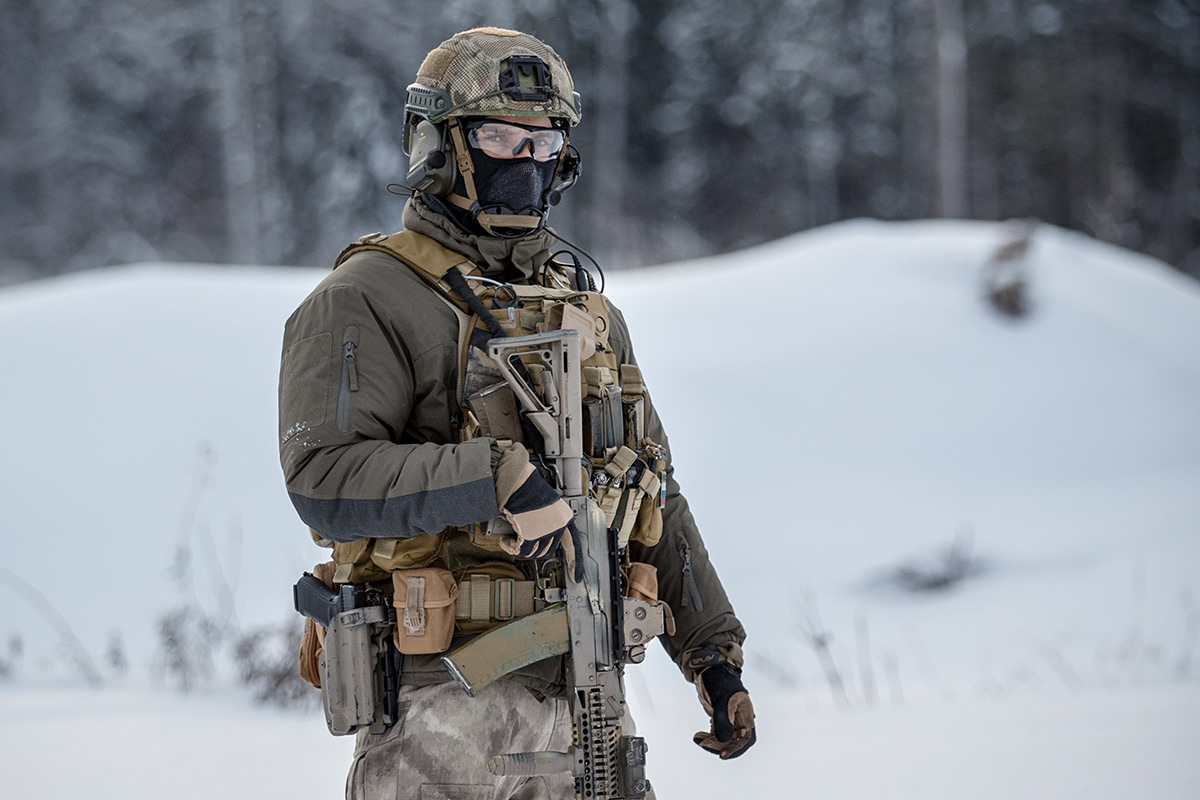
Where legally permitted and independently verified, our network may include appropriately qualified former special-operations and military personnel. We do not claim that every specialist holds such a background, and prior service confers no current government, military, law-enforcement or intelligence authority of any kind.
04 Capabilities
Six areas of work. Each is scoped, priced and staffed against the specific assignment.
Capability is only meaningful when it is matched correctly to the requirement. Every engagement begins with a scoping conversation, not a standard package.
C / 01
Discreet protective support for executives, principals and eligible clients, built on advance planning and proportionate presence.
Open Executive ProtectionC / 02
Personal safety and protective-security planning for individuals and families, including routine review and practical guidance.
Open Personal SecurityC / 03
Security assessments, written procedures and risk-management guidance that an organisation can actually operate and maintain.
Open Security ConsultancyC / 04
Travel risk planning and personal-security preparation for business travel, relocation and unfamiliar operating environments.
Open Travel SecurityC / 05
Access to appropriately qualified former military, security and protective professionals — screened, licensed and lawfully engaged.
Open Specialist PersonnelC / 06
Lawful personal-safety, awareness and defensive training for individuals, families, teams and travelling personnel.
Open Training05 The Discipline Framework
Every assignment — a single journey or a long-term programme — runs through the same five stages. The depth changes. The sequence does not.
The framework exists so that decisions are traceable: why a control was recommended, what it was intended to address, and how it will be reviewed. It deliberately describes how we work rather than operational detail, which is never published.

Stage 01
Understand the client, the environment, the routine and the exposure. Nothing is recommended before the setting is genuinely understood.
Stage 02
Build the plan: roles, routes, venues, communication, escalation and contingencies — agreed with the client and documented.
Stage 03
Deliver proportionate protective support with the smallest effective footprint, maintaining discretion and lawful conduct throughout.
Stage 04
If conditions change, follow the rehearsed response: withdraw exposure, notify, coordinate with the appropriate authorities and stabilise.
Stage 05
Debrief honestly, record what changed, and update the assessment. A plan that is never reviewed stops being a plan.
This framework describes our professional method. It does not publish tactical procedures, protective detail, or any information that could compromise a client or assignment.
06 International Capability
Security does not cross a border unchanged. What is lawful, licensable and practical in one jurisdiction may be restricted, regulated differently, or prohibited in the next.
We therefore assess international capability assignment by assignment, and we say so plainly rather than advertising a map of offices we do not operate. Where we cannot deliver lawfully, we say that too.
Assessed before any international commitment
07 Why Us
Six commitments. Each one is something a client can hold us to.
Structured professional conduct. Briefings happen, checks are completed, records are kept, and standards do not relax because an assignment is quiet.
Relevant professional backgrounds. We match people to assignments on demonstrable, verified competence — never on reputation or narrative.
Security without unnecessary visibility. The presence of protection should not itself become an announcement about the person being protected.
Planning before exposure becomes risk. Time spent in advance is the cheapest and most effective control available to any client.
Operations within applicable laws. Licensing, work authorisation and local regulation are treated as conditions of work, not obstacles to it.
Clear responsibility for professional conduct. Named ownership of decisions, documented reasoning, and an honest review after every assignment.
08 Next Step
A first conversation costs nothing and commits you to nothing. It establishes the requirement, the jurisdiction and whether we are the right organisation for the assignment.